


You built what you said you wanted.
The clients are good.
Revenue is stronger.
Visibility is working.
On paper, this is success.
And yet, something feels heavier than you expected.
You’re grateful. You know this is growth. You worked for it.
But the weight of it doesn’t match the excitement you imagined.
That tension is rarely about effort.
It’s about capacity.
And most founders don’t realize they’ve outgrown their own bandwidth until exhaustion forces the conversation.
Burnout Isn’t a Time-Management Problem
There’s an assumption embedded in entrepreneurial culture: if you’re overwhelmed, you need better systems. Better calendars. Better routines.
But burnout often shows up even when systems are solid.
It shows up when growth outpaces capacity.
That’s not a failure of discipline.
It’s a design issue.
In the episode that sparked this reflection, the central idea was simple: burnout is rarely about how many hours you have. It’s about what those hours are carrying.
Capacity Is Not Time
Time is measurable.
Capacity is not.
Capacity includes:
-
Emotional energy
-
Cognitive load
-
Creative bandwidth
-
Decision-making stamina
You can technically “have time” and still be completely over capacity.
You can clear your schedule and still feel mentally saturated.
This is why sustainable business growth requires more than calendar management. It requires capacity awareness.
When founders ignore the invisible layers of capacity, burnout begins quietly. It doesn’t arrive as collapse. It arrives as irritation. Avoidance. Subtle resentment toward work you once loved.
Not because the work is wrong.
Because the design is misaligned.
When Growth Outpaces Leadership Design
This is the quiet discomfort many established service-based business owners experience.
You wanted the growth.
You worked for the growth.
You achieved the growth.
But you didn’t redesign your business around the new weight of it.
More clients mean more communication.
More visibility means more decision fatigue.
More revenue means more responsibility.
None of this is inherently negative.
But accumulation without recalibration leads to overload.
And most founders don’t overload themselves recklessly. They do it responsibly.
They say yes to aligned opportunities.
They expand because momentum feels right.
They normalize exhaustion as part of the process.
Not careless. Just unexamined.
Visibility as Capacity Support or Drain
This is where visibility alignment becomes more than a marketing conversation.
Some visibility models demand constant performance.
Constant presence.
Constant emotional output.
That kind of growth competes with your bandwidth.
Other models compound quietly.
Pinterest, for example, operates differently than platforms built around daily engagement. It doesn’t require constant emotional availability. It compounds over time. It allows visibility to remain present even when your energy fluctuates.
That matters.
Visibility should protect your bandwidth, not compete with it.
When your marketing model requires daily reinvention, it erodes capacity. When it compounds predictably, it supports founder wellbeing.
Sustainable business growth isn’t only about revenue curves.
It’s about whether your visibility model respects your cognitive and emotional limits.
Designing Growth Around Bandwidth
Ambition asks: What’s possible?
Bandwidth asks: What’s sustainable?
Most founders design growth around opportunity.
Fewer design around capacity.
But growth feels lighter when visibility aligns with your energy. When systems hold decisions you’ve already made. When momentum doesn’t depend on daily output.
This isn’t about shrinking your ambition.
It’s about stabilizing it.
Leadership clarity means recognizing that expansion without recalibration eventually collapses.
Bandwidth-aligned growth compounds differently. It feels steadier. Less fragile. More intentional.
And most importantly, it doesn’t require you to fracture yourself to maintain it.
Burnout as Information, Not Weakness
Burnout isn’t evidence that you’re not cut out for growth.
It’s evidence that your current design doesn’t match your current capacity.
Founder wellbeing isn’t separate from visibility strategy. It’s embedded in it.
Decision fatigue accumulates when too many variables remain unresolved. Leadership clarity reduces that load. Sustainable business growth requires fewer daily negotiations with yourself.
When you treat burnout as information instead of personal failure, you gain leverage.
You stop asking, “What’s wrong with me?”
And start asking, “What needs to be redesigned?”
That shift alone changes everything.
Where is your business asking more of you than your capacity can currently hold and what would change if you honored that?
A Calm Place to Start
If your visibility is draining your capacity, the VEIL Visibility Audit offers clarity without pressure. It evaluates visibility alignment, evergreen structure, and decision load through the lens of sustainability.
And if daily marketing decisions are quietly eroding your bandwidth, the Styled Pin Collection exists to reduce cognitive demand—allowing visibility to run in the background rather than compete for your attention.
Neither is about pushing harder.
Both are about aligning growth with your actual capacity.
About This Episode
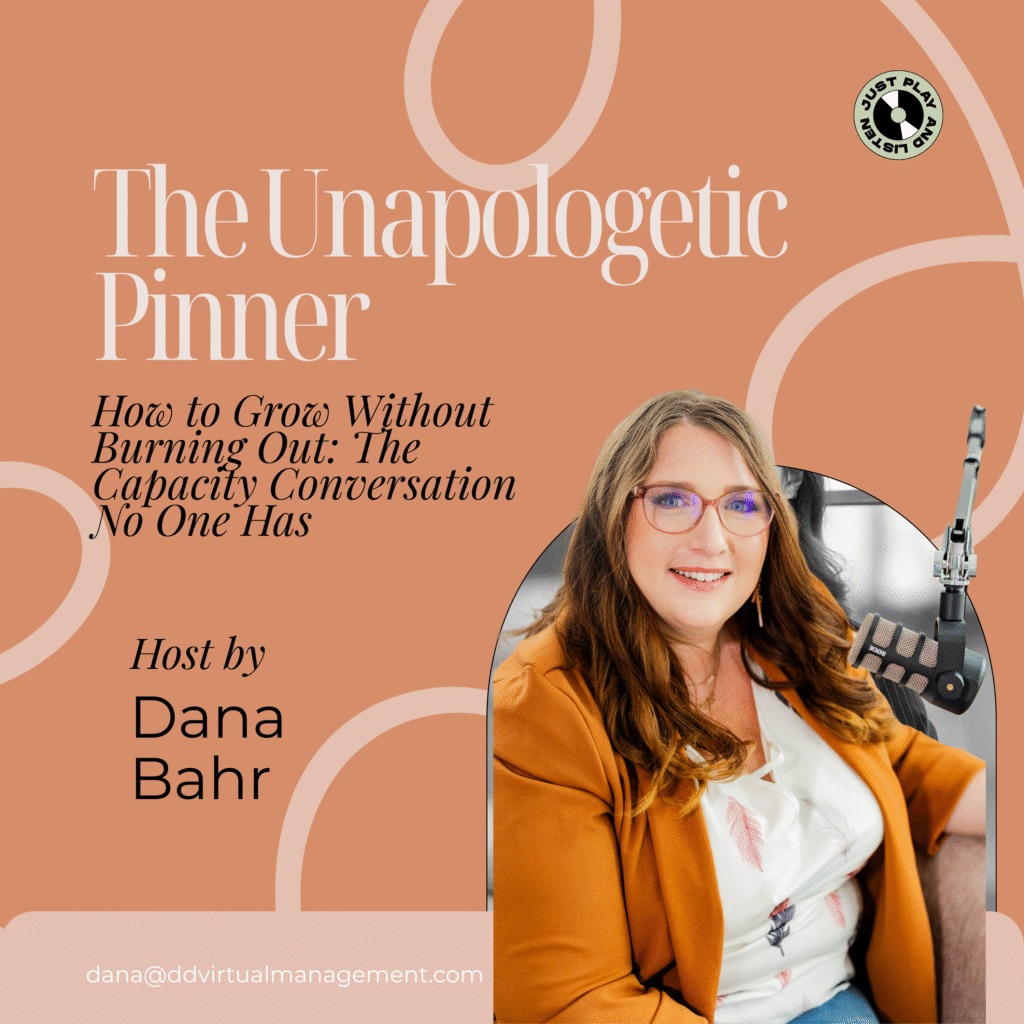
This article is a strategic interpretation of the podcast episode “How to Grow Without Burning Out: The Capacity Conversation No One Has” from The Unapologetic Pinner.
The full episode expands on burnout as a design issue, capacity misalignment during growth, and how visibility decisions either erode or protect founder bandwidth.
For the complete reflection and context, listen to the full episode of The Unapologetic Pinner.

+ show Comments
- Hide Comments
add a comment